Risk assessment for work-at-height equipment: the guide for site managers
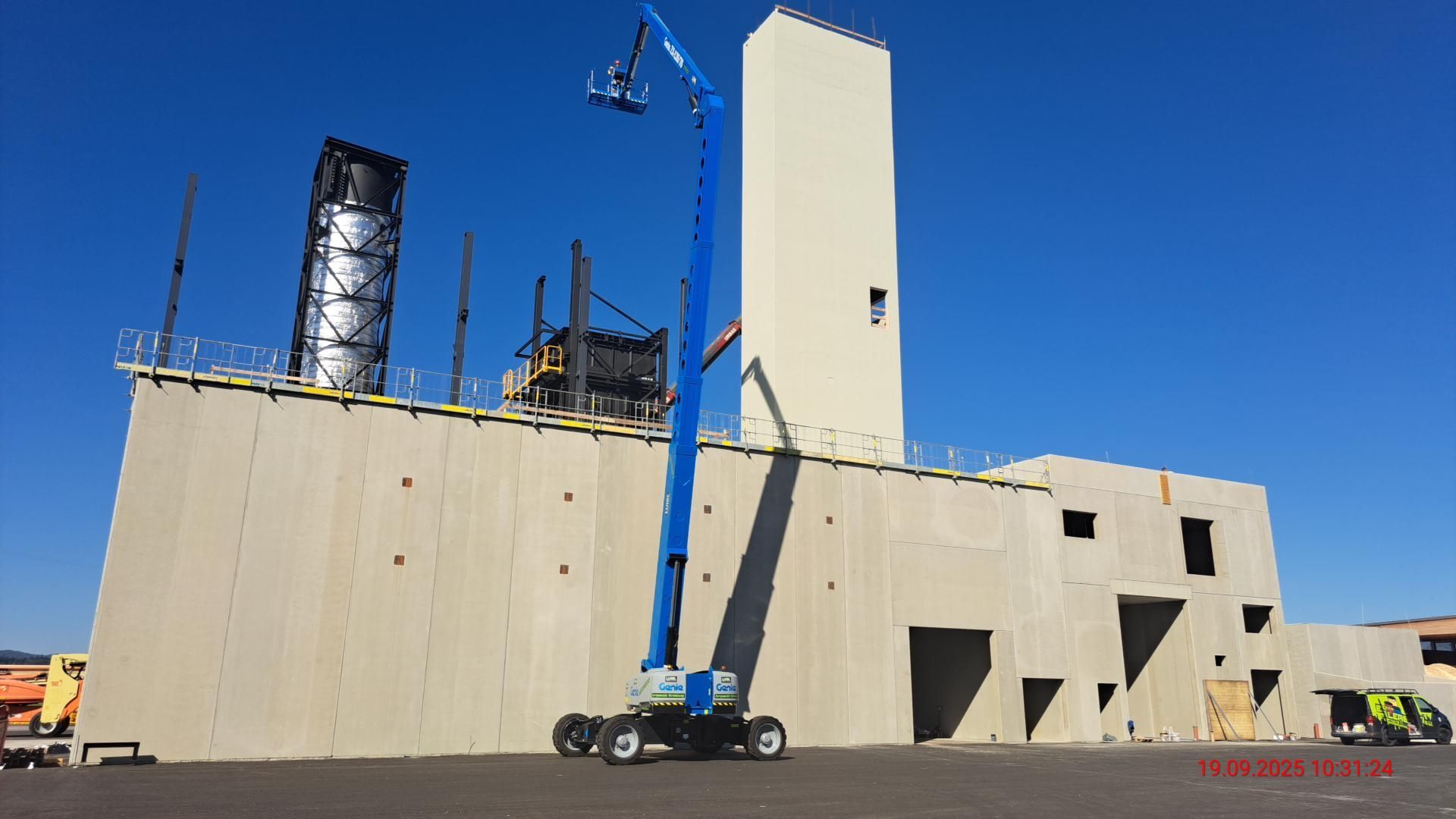
Before the first scissor lift or articulating boom lift is set up on a construction site, a document must exist that many business owners underestimate: the risk assessment. It is not a formality but, under the Labour Code (No. 262/2006 Coll.) and Government Regulation No. 378/2001 Coll., the legal prerequisite for work equipment such as an aerial work platform or a telehandler to be used at all. Anyone who carries it out incorrectly or not at all is personally liable in the event of damage - regardless of whether the rented machine itself was technically flawless.
For site managers and safety officers, a question therefore arises before every enquiry to Luibl Rental that begins long before machine selection: what hazards does the specific job site involve, and what measures must be in place before the operator first gets in? This guide takes you step by step through the process and shows how the assessment specifically affects the choice of the right work-at-height equipment.
Why the risk assessment is mandatory - and who is responsible for it
Occupational safety rules require the employer, or the site manager responsible on site, to identify and assess all associated hazards before a piece of work equipment is used for the first time. This expressly applies to rented machines as well: responsibility for assessing the specific job site remains with the operator, i.e. the company renting the machine - not with the rental company. Luibl Rental supplies a technically inspected machine with valid periodic inspection, but whether this machine is suitable for the particular site, ground and weather conditions must be assessed and documented by the operator.
This responsibility cannot be delegated without transferring it in writing. If a site foreman or supervisor is tasked with carrying it out, this assignment must be documented just like the assessment itself. If the document is missing during an inspection by the regional labour inspectorate, the risk assessment is legally deemed not to have been carried out - even if work on the site was in fact safe.
The five steps of risk assessment in practice
The prescribed procedure follows a fixed scheme that can be made specific for the use of aerial work platforms and telehandlers. First, all hazards that may occur at the planned job site are identified: the load-bearing capacity of the ground, possible wind loads outdoors, proximity to overhead power lines, traffic areas in the vicinity and any fall edges or floor openings. Only when this list is complete does the evaluation follow - i.e. the estimate of how likely an incident is and how serious the possible consequences would be.
Based on this evaluation, specific measures are defined in the third step. This is where the so-called TOP principle applies, which sets the order of permissible protective measures: technical measures before organisational measures before personal protective equipment. For an aerial work platform this means in practice: first check whether a technical solution such as outrigger pads for load distribution or an automatic wind-sensor cut-off can eliminate the hazard. Only if that is not enough do organisational measures such as barriers and time windows for the job follow, and finally personal fall protection equipment as the last layer of protection for the operator.
In the fourth step, the defined measures are actually implemented and communicated to everyone involved - especially the operator of the aerial work platform. The fifth and often neglected step is checking effectiveness: only once it has been verified that the measures really work in everyday site operation is the process complete. If conditions change - for example because a second construction phase begins or the ground changes due to the weather - the assessment must be updated.
Machine-specific hazards: what matters for which platform
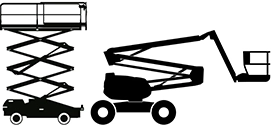
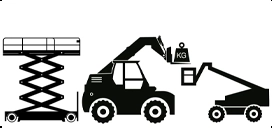
The specific hazards differ considerably depending on the machine used, which is why a blanket assessment without reference to the machine is usually insufficient in practice. With scissor lifts indoors, the main issues are the floor load from the wheels' point loads and the ceiling height, while with diesel scissor lifts outdoors, wind load, uneven ground and the need for outrigger pads also become relevant. Articulating boom lifts, with their ability to reach sideways over obstacles, bring a different hazard category: here the assessment must cover the entire slewing range of the boom, including possible collisions with facade elements or power lines.
Spider lifts are used specifically on difficult or sensitive terrain, for example in parks or on historic floors - here the risk assessment shifts more towards ground pressure and surface load. With truck-mounted platforms, a road traffic component is added, as setting up on or next to public roads entails additional safeguarding duties. If you are unsure which hazard category applies to your project, the category overview of aerial work platforms from Luibl Rental provides the technical key data for all platform types as a starting point for your own assessment.
The interplay with operator qualification and periodic inspection
The risk assessment does not stand alone but forms the basis for two further duties that are closely intertwined in practice. It directly determines what qualification the operator must have: if, for example, the assessment shows that an articulating boom lift with high slewing dynamics will be used, you must ensure that the assigned operator holds the appropriate IPAF category. Details on the individual categories and written assignment are summarised in the guide to the IPAF operator licence.
The risk assessment is also linked to the technical inspection of the machine, but does not replace it: the periodic inspection under Government Regulation No. 378/2001 Coll. confirms that the machine itself is safe, while the risk assessment evaluates whether its use at the specific location under the specific conditions is safe. Both documents are required independently of each other during an inspection. How inspection documentation is organised at Luibl Rental and what proof must be available on the machine is explained in detail in the guide to periodic inspection of lifting equipment.
Documentation: what goes into the report and how long it is kept
A risk assessment carried out only verbally has no evidential value in court or during labour inspectorate checks. The report must include the job site and period, the hazards identified, the measures defined according to the TOP principle, the responsible person and the date of the effectiveness check. The document is signed by the person who carried out the assessment, usually the site manager or a specialist assigned by him in writing.
The retention period depends on how long the work equipment is in use, but at least until the respective construction project is completed. For recurring, comparable jobs - for example when the same scissor lift is regularly used in the same factory hall - an existing assessment can serve as a template, but must be reviewed and updated whenever the conditions change significantly.
Free checklist for your own risk assessment
To make getting started easier for site managers, Luibl Rental provides a compact checklist that summarises all relevant check points for the use of aerial work platforms and telehandlers in the right order - from assessing the ground and wind load limits to a documentation template based on the TOP principle. The checklist does not replace an individual assessment on site, but it provides a reliable structure so that even site managers without a daily safety routine do not overlook any relevant point.
Rent the right platform for the assessed job
Once the risk assessment is complete, it is usually also clear which machine category meets the requirements: an electric scissor lift for dust-free indoor work, an articulating boom lift for work over obstacles or a spider lift for sensitive outdoor surfaces. Luibl Rental delivers the right machine from Passau throughout the Czech Republic and Europe, including a valid inspection sticker, and helps with questions on machine selection so that the technical measures defined in the assessment can actually be implemented. We provide an operator briefing on handover of the machine.
FAQ: common questions on risk assessment for aerial work platforms
Do I really have to prepare a risk assessment myself for a rented machine? Yes. Responsibility for the risk assessment lies with the operator, i.e. the company renting the machine, regardless of whether the machine was bought or rented. Luibl Rental provides a technically inspected machine; assessing the specific job site remains the task of the site manager.
Is a general risk assessment sufficient for all construction sites? No. Since ground, weather and ambient conditions differ from site to site, the assessment must be reviewed for every new job site and adapted in the event of significant differences.
What happens if no risk assessment is available during an inspection? If the document is missing, the assessment is legally deemed not to have been carried out. This can lead to fines, an immediate prohibition of operation and, in the event of damage, personal liability of the person responsible.
How does the risk assessment differ from the periodic inspection? The periodic inspection confirms that the machine itself is technically safe. The risk assessment evaluates whether using this machine at the specific location under the specific conditions is safe. Both are required independently of each other.
Who may carry out the risk assessment? In principle the employer or a competent person assigned in writing, such as a site manager or a qualified health and safety specialist. The assignment must be documented.
Questions about the right machine category for your assessed job are answered by the Luibl Rental team during service hours Mon-Fri, 08:00-17:00.