Aerial work platforms in film, event and trade fair productions - what organisers need to know
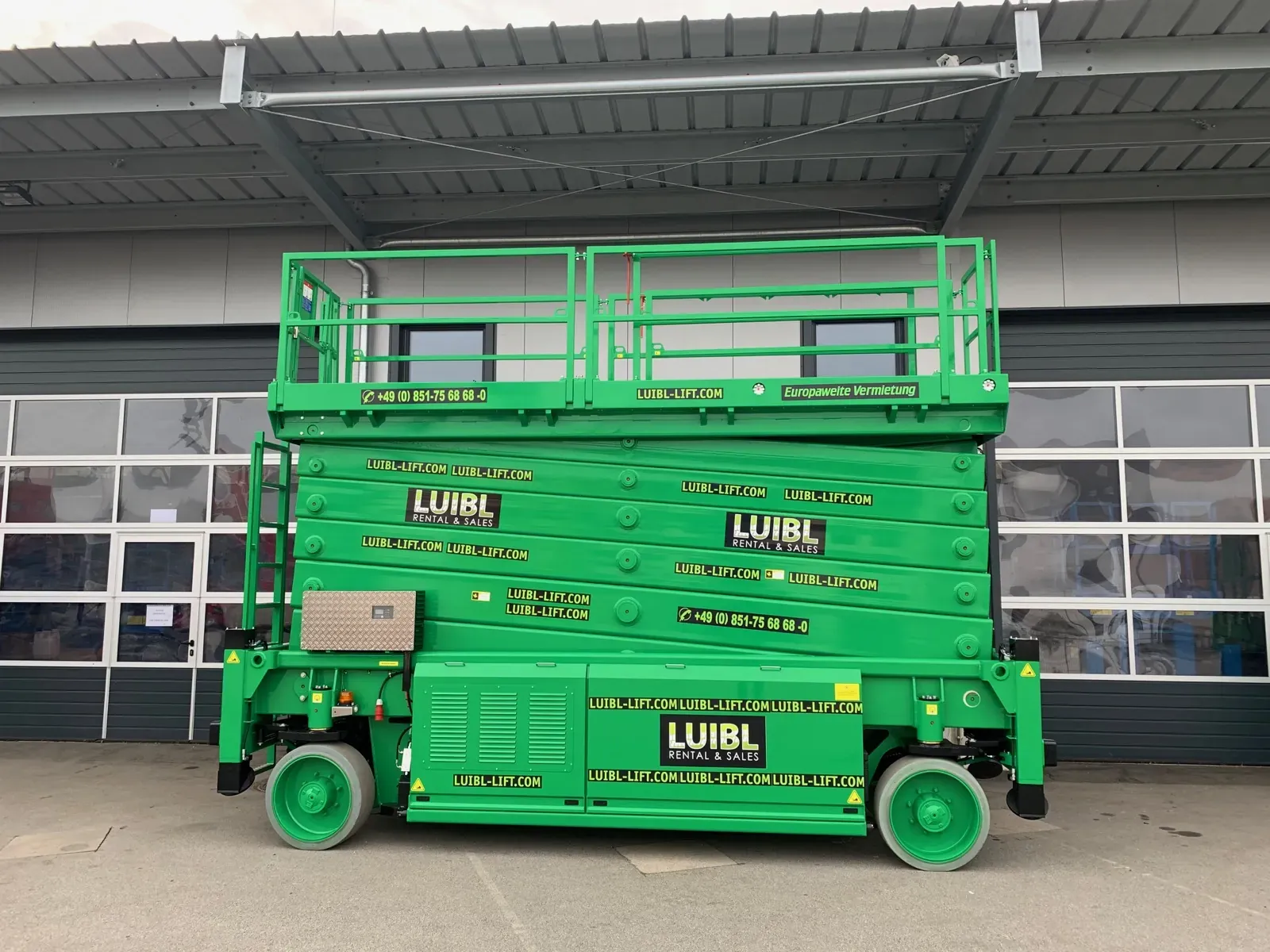
Rigging a concert stage at a height of 8 metres, setting up camera positions for a TV production, fitting trade fair stands with ceiling lighting - behind each of these set-ups there is usually an aerial work platform. And that is exactly where problems often begin: events have tight time windows, narrow halls and zero tolerance for breakdowns. Anyone who orders the wrong machine or starts planning too late drags the entire set-up into delay. This article shows which aerial work platforms are suitable for event productions, what matters when choosing one - and what rental companies such as Luibl must deliver so that set-up and dismantling really run smoothly.
What applications are there at events?
Aerial work platforms are used at events in far more places than many people assume. Roughly, four areas can be distinguished:
Rigging and stage technology
Truss structures, motor hoists, loudspeaker clusters - all of this hangs at height and has to be installed, maintained and dismantled again after the event. Anyone who needs a safe, positionable platform for this cannot do without an aerial work platform.
Camera and lighting positions
Film and TV productions often place cameras in positions that cannot be reached without a platform: hall roofs, overhead shots, wide shots from an elevated perspective. Lighting designers also use aerial work platforms to align spotlights precisely.
Trade fair construction and exhibitions
Ceiling systems, signage and lighting installations in exhibition halls require work at 6 to 12 metres - usually on smooth concrete floors, often under considerable time pressure. The halls are large, but electric scissor lifts can move efficiently from point to point here.
Decoration and set construction
Large sets, facades, green walls or suspended installations - in the events sector, manual work at height is the rule rather than the exception.
Which aerial work platform for which event application?
The conditions in the hall matter more than the actual task. The most important parameters: ceiling height, floor condition, width of the access routes and whether emissions are permitted.
Electric scissor lift: the standard in the hall
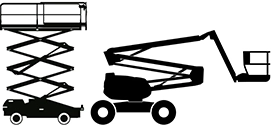
For most trade fair and hall productions, renting an electric scissor lift is the obvious choice. It works without local emissions, leaves no tyre marks on sensitive hall floors and can be positioned precisely. Working heights from 6 to 14 metres cover most exhibition halls and event venues. Typical models for event use have a platform width of 1.20 to 1.80 m - wide enough for two people with tools, narrow enough for most stand aisles.
When it does not fit:
On uneven ground, stage ramps or wet outdoor surfaces, scissor lifts quickly reach their limits.
Articulating boom lift: for reach over obstacles
When rigging truss structures or mounting camera positions in hard-to-reach places, outreach is more decisive than sheer height. An articulating boom lift can be positioned over grandstands, stage structures or barriers without the machine having to stand directly underneath. Working heights of up to 58 metres allow safe work even in large arenas or production halls - even when the floor below is not clear.
Mast lift: compact for confined areas
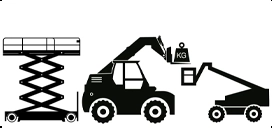
In historic buildings, castles or small event venues where ceiling height and passageways are severely limited, a mast lift is often the only solution. With widths under one metre, they fit through normal doors and can be manoeuvred in minimal space.Platform typeTypical working heightFloor typeSpecial featureElectric scissor lift6-14 mLevel, pavedNo local emissions, wide platformArticulating boom liftup to 58 mPavedOutreach over obstaclesMast liftup to 12.65 mLevel, indoorsVery narrow, fits through doors
What is particularly important at events
Time windows are non-negotiable
Exhibition halls and event venues have fixed set-up times - often only 24 to 48 hours before the first visitor walks through the door. If the machine arrives late or does not work, there is no buffer. That is why the arrangements with the rental company should be more detailed than for a normal construction site job: delivery time, contact person on site, and what happens if the machine breaks down. Luibl delivers with its own low-loader fleet from Passau and offers on-site technical support - at events this is not a luxury but genuine security.
Check the floor load in halls
Exhibition halls are rarely designed for unlimited surface loads. An electric scissor lift with a dead weight of 3,000 to 5,000 kg places point loads on the floor that must be agreed with the hall operator. This applies especially to older event halls or historic buildings. If in doubt: base plates and consultation with the rental company.
Permits and operator responsibility
Anyone using an aerial work platform at a public event bears responsibility for safe operation as the operator. This includes instructing the operators, checking the ground and - at certain venues - coordination with the venue's safety concept. Luibl provides an operator briefing on handover directly on the rented machine.
Set-up and dismantling: two separate planning steps
During set-up the hall is empty, during dismantling it is not. After a trade fair or event, exhibits, decorations and often the cleaning crew are already in the way. Anyone who plans dismantling as a simple mirror image of set-up usually gets surprises. A more compact machine can be the better choice for dismantling than the one that worked without problems on the open floor during set-up.
Outdoor events: different requirements, different machines
Different rules apply at festivals, open-air concerts or outdoor events. Paved ground is rare, rain and wind are to be expected, and the distances on site are greater. For outdoor events, mainly diesel articulating boom lifts or spider lifts are used. The latter are built specifically for soft, rough ground and can handle gradients of over 50 % - which becomes relevant on hilly festival grounds or unpaved sections of terrain. Important: Keep an eye on wind strength when platforms are extended. From wind force 5, operation should always be stopped. At events with their own safety concept, this is usually specified anyway.
Book early - especially in the peak event season
Spring and autumn are peak season for trade fairs, congresses and events - exactly when the availability of special machines becomes tight. Anyone who orders the aerial work platform for trade fair construction only two weeks in advance risks having to make do with the first available model instead of the right one. Luibl has a broad range, delivered by low-loader from Passau throughout the Czech Republic. Nevertheless: the earlier the enquiry, the better the choice - and the more time remains to agree the details properly. Rent aerial work platforms Rent electric scissor lifts Rent articulating boom lifts
FAQ
Which aerial work platform is best suited for trade fair construction?
For most exhibition halls, an electric scissor lift is the first choice. It works without local emissions, leaves no marks on smooth hall floors and is very manoeuvrable on level surfaces. If you need outreach over structures, an articulating boom lift is the better option.
May I use an aerial work platform at a public event?
Yes, but as the operator you are responsible for safe operation: instructing the operators, checking the ground and coordinating with the venue's safety concept. An operator briefing on handover of the machine is recommended and reduces legal risks.
How far in advance should I book an aerial work platform for an event?
In peak season (March to May, September to November), ideally 4 to 6 weeks in advance. For large projects with several machines, even earlier. Short-notice enquiries are possible but limit the choice of models.
What happens if the aerial work platform breaks down during set-up?
That is exactly the point to clarify before booking. Reputable rental companies offer on-site technical support and prompt replacement in the event of defects. On request, Luibl provides technicians on site and delivers with its own fleet - this minimises dependence on external service providers.
Can I also rent an aerial work platform for outdoor festivals?
Yes. For soft or rough terrain, spider lifts are the right choice. For paved outdoor areas, diesel articulating boom lifts are suitable. Important: keep an eye on wind strength and stop operation at force 5 and above.
The right rental company for aerial work platforms
Aerial work platforms in film, event and trade fair productions follow different rules than on a classic construction site. Time pressure, hall conditions, floor loads and set-up/dismantling logistics call for more careful planning - and a rental company that not only delivers the machine but also responds when it matters. If you tackle the choice of machines and suppliers early, you avoid most surprises during set-up. For a no-obligation quote - including for several machines combined - Luibl is available at luibl.eu.