Aerial work platforms: all types, applications and selection criteria
What is an aerial work platform?
Which aerial work platform for which task? The answer depends on working height, ground, access situation and space conditions - and is not always obvious. This guide explains all common platform types with their strengths and limitations, provides a decision matrix for typical application scenarios and shows when which drive type is the right choice.
An aerial work platform is a powered work machine with a basket or platform that lifts people and material to working height and holds them there. Unlike ladders or scaffolding, aerial work platforms are mobile machines that the operator can control from the basket.
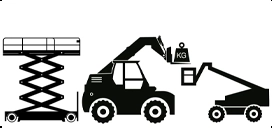
The term covers all self-propelled and towed equipment for temporary work at height - scissor lifts, articulating boom lifts, telescopic boom lifts, truck-mounted platforms, spider lifts and trailer-mounted platforms. Synonyms: cherry picker, elevating platform, mobile elevating work platform.
Aerial work platform types at a glance
Scissor lift
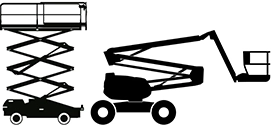
The scissor lift raises its rectangular platform vertically - without outreach. The scissor mechanism principle makes it particularly stable at high loads.
Typical working heights: 6-18 m (electric scissor lifts), up to 30 m (diesel high-lift scissor lift)
Strengths: High load capacity (350-900 kg), wide platform, space-saving when driving (compact width), suitable for indoor use (electric models)
Limitations: Vertical lift only, no outreach; outdoors on level, load-bearing ground
Main applications: Hall and warehouse work, exhibition stand construction, ceiling work in buildings, facade installation with direct access
Articulating boom lift (articulated telescopic boom)
A combination of articulating arm and telescopic boom - the most flexible platform class for jobs with obstacles or confined access.
Typical working heights: 12-43 m
Outreach: up to 21 m (depending on model)
Strengths: Up-and-over reach across obstacles, work beside the set-up point, enormous flexibility; Genie Z series and Magni T series as reference
Limitations: Lower load capacity than a scissor lift; set-up area must be load-bearing
Main applications: Facade work over canopies, tree work, bridge maintenance, outdoor work over stairs or walls
Rent articulating boom lifts ->
Telescopic boom lift (straight telescopic boom)
Straight boom with height and outreach - for great working and overhead heights without reaching over obstacles.
Typical working heights: 15-56 m
Strengths: Large outreach; quick deployment in open surroundings; Manitou 280 TJ+ as reference up to 28 m
Limitations: No articulating arm function; ground and set-up area are decisive
Trailer-mounted platform
Small unit on a transport trailer that must be approved for road use - can be towed by a standard car or van.
Typical working heights: 8-22 m
Strengths: Towed by a car with the required Czech driving licence category, independently transportable, lowest operating costs
Limitations: Lowest load capacities (usually 200-230 kg), limited range of use, no four-wheel-drive option
Truck-mounted platform
Aerial work platform mounted on a truck chassis - combines transportability with working reach for road-based jobs.
Typical working heights: 17-72 m
Strengths: Quickly on site, no separate transport logistics, ideal for road and utility work
Limitations: Requires the required Czech driving licence category, access restrictions on confined sites
Rent truck-mounted platforms ->
Spider lift (tracked platform)
Hydraulic aerial work platform on a crawler chassis - for difficult terrain and low ground-bearing capacity.
Typical working heights: 12-56 m
Strengths: Low ground pressure, off-road capability (including slopes, soft ground, woodland), electric drive without local emissions
Limitations: Slow self-propulsion; transport on a low-loader required
Mast lift
Vertical lifting mast - the most economical machine for purely vertical work in confined indoor spaces.
Typical working heights: 5-12 m
Strengths: Smallest footprint and width of all platform types; ideal for narrow aisles and confined indoor spaces
Limitations: No outreach; low load capacity; indoor only
Which aerial work platform for which job?
Choosing the right platform type depends on several factors:
| Criterion | Scissor | Articulating | Telescopic | Truck-mounted | Spider | Trailer |
|---|---|---|---|---|---|---|
| Working height up to 15 m | ✓✓ | ✓✓ | ✓✓ | ✓ | ✓✓ | ✓✓ |
| Working height 15-30 m | ✓ (diesel) | ✓✓ | ✓✓ | ✓✓ | ✓✓ | ✗ |
| Working height >30 m | ✗ | ✓ (43 m+) | ✓✓ | ✓✓ | ✓ | ✗ |
| Outreach needed | ✗ | ✓✓ | ✓ | ✓✓ | ✓ | ✓ |
| Indoor / hall use | ✓✓ (E) | ✓ (E) | ✓ (E) | ✗ | ✓✓ (E) | ✓✗ |
| Difficult terrain | ✗ | ✗ | ✗ | ✗ | ✓✓ | ✗ |
| High load capacity (>400 kg) | ✓✓ | ✗ | ✗ | ✓ | ✗ | ✗ |
E = electric version available
Drive types: diesel, electric, hybrid/Bi-Energy
Electric: No local emissions, quiet, suitable for indoor halls, requires load-bearing hard floors; typical for scissor lifts, mast lifts and compact articulating boom lifts
Diesel: For outdoor and off-road use; Stage V compliant - all new Luibl machines meet the Stage V emission standard
Hybrid / Bi-Energy: Combines diesel mobility with electric operation indoors; a growing segment, especially for articulating boom lifts
Law and safety in brief
Anyone operating an aerial work platform needs the required operator qualification in line with applicable Czech safety rules and CSN EN standards - not a statutory "driving licence", but documented operator training. Details: Aerial work platform operator qualification: what operators and employers should know ->
Periodic inspections are governed by Government Regulation No. 378/2001 Coll. - they are carried out by a competent person. With rental platforms from Luibl Rental, the inspection is always up to date. Details: Periodic inspections of aerial work platforms ->
When working from an aerial work platform with personal fall protection equipment (Government Regulation No. 362/2005 Coll., work at height), certified anchor points must be available.
What does an aerial work platform cost?
Rental costs depend on the platform type, working height, rental duration and job site. Detailed price ranges per day, week and month: Aerial work platform rental: costs at a glance ->
Rent or buy an aerial work platform?
For short and medium-term jobs, renting is economically superior: no tied-up capital, no organisation of inspections and maintenance, no storage or transport effort. Depending on machine class and utilisation, the break-even point for buying is around 150-250 rental days per year - often more than most construction companies need for a single platform type.
Luibl Rental delivers all platform types from Passau throughout Europe with its own low-loader fleet. Rent an aerial work platform now -> | Send an enquiry ->
In-depth guides to the individual types
There is a separate guide for each type with variants, heights, load capacities and limits of use:
Frequently asked questions
What types of aerial work platforms are there?
The main types are: scissor lifts (vertical lift, high load capacity), articulating boom lifts (maximum flexibility, up-and-over reach), telescopic boom lifts (large outreach), truck-mounted platforms (road operation), spider lifts (off-road use) and trailer-mounted platforms (towed by car). Each type is optimised for specific application scenarios.
Which aerial work platform do I need for which height?
Up to 15 m: a scissor lift or trailer-mounted platform is sufficient for most tasks. 15-30 m: articulating or telescopic boom lift. Over 30 m: large telescopic boom lift or truck-mounted platform. For off-road use at any height: spider lift. The decision matrix above provides a quick overview.
What is the difference between a scissor lift and an articulating boom lift?
The scissor lift raises vertically without outreach - but with high load capacity and a stable, wide platform. The articulating boom lift combines an articulating arm and telescopic boom and can reach sideways over obstacles - but with lower load capacity and a smaller platform.
Who is allowed to operate an aerial work platform?
Every operator needs the required operator qualification in line with applicable Czech safety rules and CSN EN standards. In addition, a machine-specific operator briefing takes place on handover of the rental machine. Details: Aerial work platform operator qualification ->
What does it cost to rent an aerial work platform?
Rental prices vary depending on platform type, working height and rental duration. You will find complete price ranges per day, week and month in our cost guide: Aerial work platform rental: costs ->