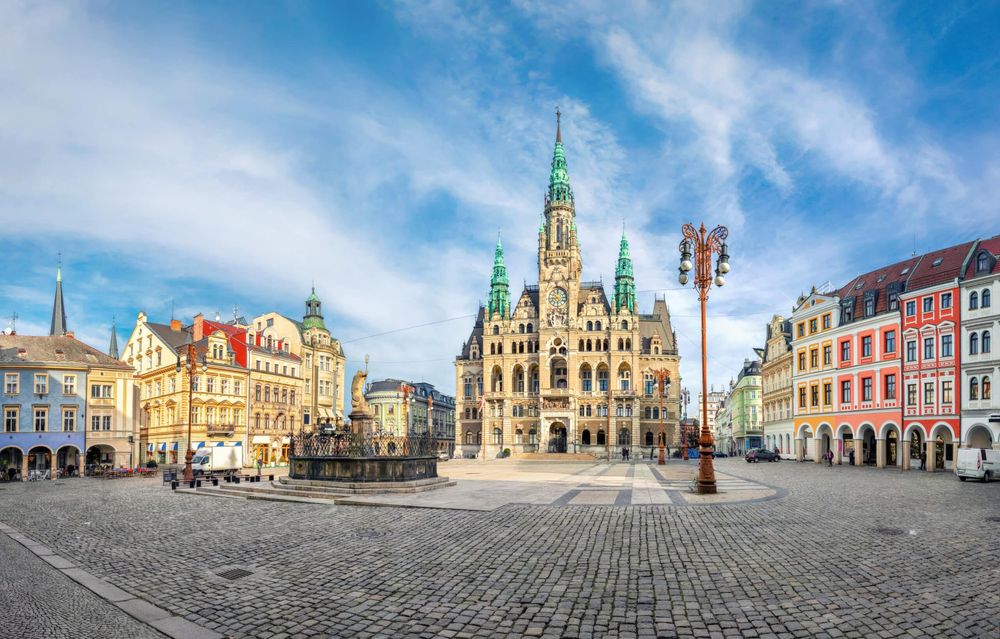
Aerial work platform and construction machinery rental in Liberec
Renting aerial work platforms and construction machinery in Liberec almost always means reckoning with slopes. The city lies in a valley basin between Jested and the Jizera Mountains; the urban area rises noticeably on both sides from the Nisa river. Residential districts, commercial areas and plant access roads lie on slopes, streets are narrow in places, and set-up areas are rarely level. Add to this an industrial structure of automotive suppliers as well as plastics and glass processors with high halls and hot plant areas. Both determine which machine makes sense here.
Setting up on a slope: gradient, outriggers and stability
Every mobile elevating work platform has a maximum gradient set by the manufacturer up to which it may be extended. If it is exceeded, the tilt monitoring blocks lifting - not a fault, but the safety function against the centre of gravity shifting. In Liberec this is the most common reason why a suitable machine cannot be used at the work point. If you work on a slope, you have three options:
-
Level the surface. Platforms with outriggers compensate for residual gradient via the outrigger pads. The permissible residual gradient according to the operating manual is decisive.
-
Change the machine class. Spider lifts with 13.00 to 39.50 m are built for this situation: tracked undercarriage, low ground pressure, narrow transport width.
-
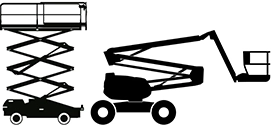
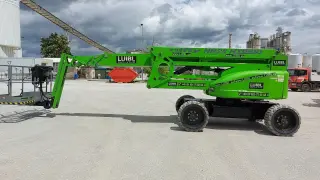
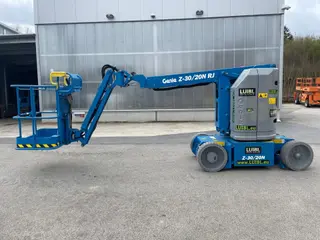
Work from below across the terrain. Articulating boom lifts with 10.89 to 48.15 m reach the work point without standing underneath it - the articulated arm bridges an embankment or retaining wall.
Clarify three details about the set-up area in advance: gradient in percent or degrees, ground conditions and available width for the outriggers. Without them, the selection remains an estimate.
Narrow access roads and winter operation in the Liberec basin
The second part of the site question is the route to the site. Many streets on the slopes are narrow, have limited turning options and do not easily let a long low-loader through. So tell us early the road width at the narrowest point, the gradient, turning options and the handover point.
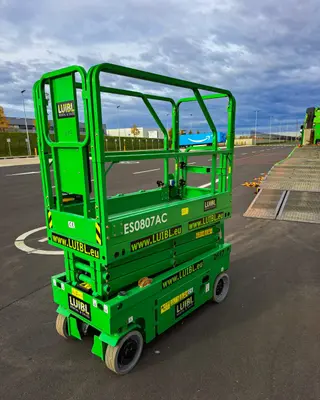
Winter operation is not a side issue in the Jizera Mountains foothills: snow and ice change the set-up area, frozen ground bears loads differently from thawed ground, and access roads are restricted at times. Nothing changes for indoor work - there, electric scissor lifts with 6.30 to 33.00 m are the standard class all year round.
Plastics and glass processing: maintenance on hot equipment
The region's processing industry poses a completely different task. In plastics and glass processing, maintenance is carried out on melting, moulding and extrusion equipment - at great hall heights, close to hot plant parts and under time pressure because the plant is at a standstill. The work point is high, the hall floor is occupied by peripherals and material containers, and a direct approach underneath rarely exists.
The articulating boom lift is therefore found more often than the scissor lift in these halls - it sets up next to the plant and guides the basket over it. If the floor is clear and level, the scissor lift remains the more economical choice because of its larger platform area; in the storage areas of supplier companies, high-bay scissor lifts with 18.50 to 33.00 m and a narrow track are used.
Two points belong in every enquiry from this environment: the permissible floor loading and the clearance height when stowed. If elevated temperatures or flying sparks occur at the work point, include that too - the limits of use are set by the plant operator.
The rental fleet in figures
| Class | Working height | Basket capacity |
|---|---|---|
| Scissor lifts electric | 6.30 - 33.00 m | 227 - 1,000 kg |
| Scissor lifts diesel | 9.70 - 34.00 m | 363 - 1,134 kg |
| High-rack scissor lifts | 18.50 - 33.00 m | 450 - 1,000 kg |
| Articulating boom lifts | 10.89 - 48.15 m | 150 - 450 kg |
| Telescopic boom lifts | 14.00 - 56.90 m | 227 - 454 kg |
| Mast lifts | 10.00 - 12.65 m | 200 kg |
| Spider lifts | 13.00 - 39.50 m | 200 - 400 kg |
Telescopic boom lifts reach the greatest working height with 56.90 m - they need a paved, load-bearing and sufficiently level set-up area, which is the limiting factor on slopes. Inside buildings, mast lifts with 10.00 to 12.65 m are the lightest class; outdoors on unpaved ground, diesel scissor lifts with 9.70 to 34.00 m.
Telehandlers, excavators and forklifts for projects in the Liberec region
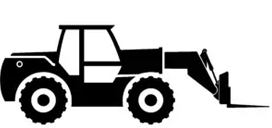
On slopes and plant premises, the telehandler is the usual carrier for material: fixed machines with 4.30 to 18.80 m at 1.25 to 25 t load capacity, and roto models with 15.42 to 38.90 m that work all around from one set-up - the decisive difference on a narrow plant yard or a hillside terrace. For halls, there are electric models with 5.85 to 30.00 m.
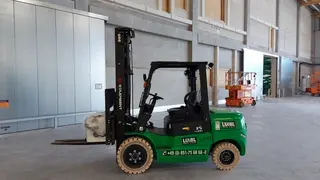
Excavators from 1.8 to 30 t operating weight cover slope stabilisation, utility trenches, foundations and interior demolition; on confined plots the 1.8 t machine is often the only one that can reach the work site. In addition, forklifts from 3 to 16 t and rough-terrain forklifts for unpaved areas.
Proof of inspection and responsibility when working in the Czech Republic
All machines are handed over inspected - with valid proof of inspection, CE documentation and operating manual; inspection intervals and maintenance history are documented.
The operator obligations at the place of work are governed by the law of the country of use. For the Czech Republic this means: Government Regulation No. 378/2001 Coll. with its annex on lifting loads and persons, CSN EN 280 as the test standard for mobile elevating work platforms, plus the Labour Code (No. 262/2006 Coll.) and Act No. 309/2006 Coll.
Especially on slopes, the division of roles matters: we supply an inspected machine including documents. Whether the set-up location is load-bearing and sufficiently level is for you as the operator to assess - as are operator instruction and the check at the start of each shift.