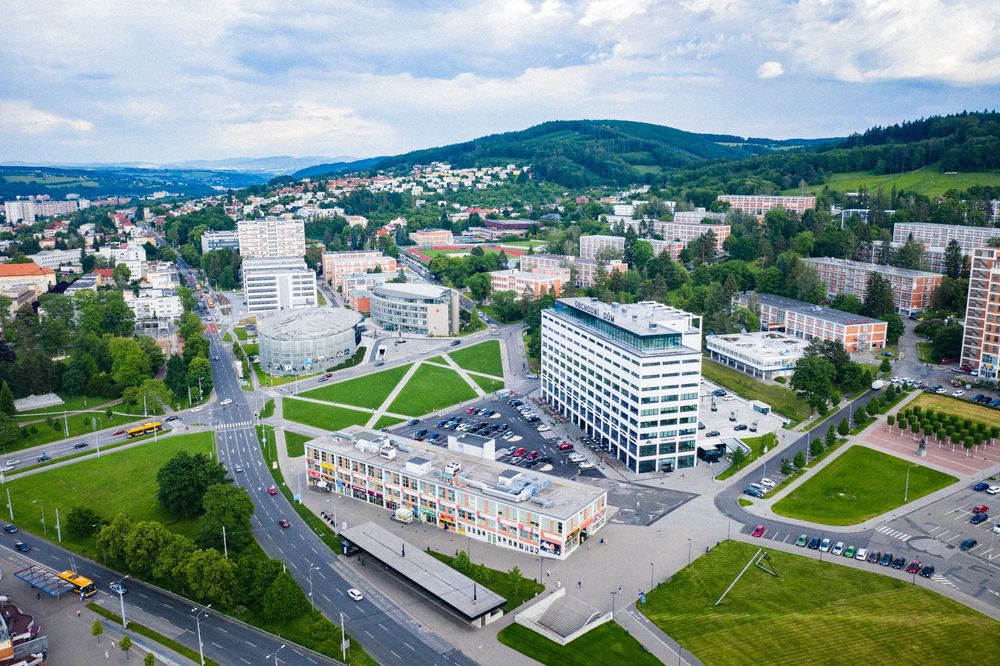
Aerial work platform and construction machinery rental in Zlin
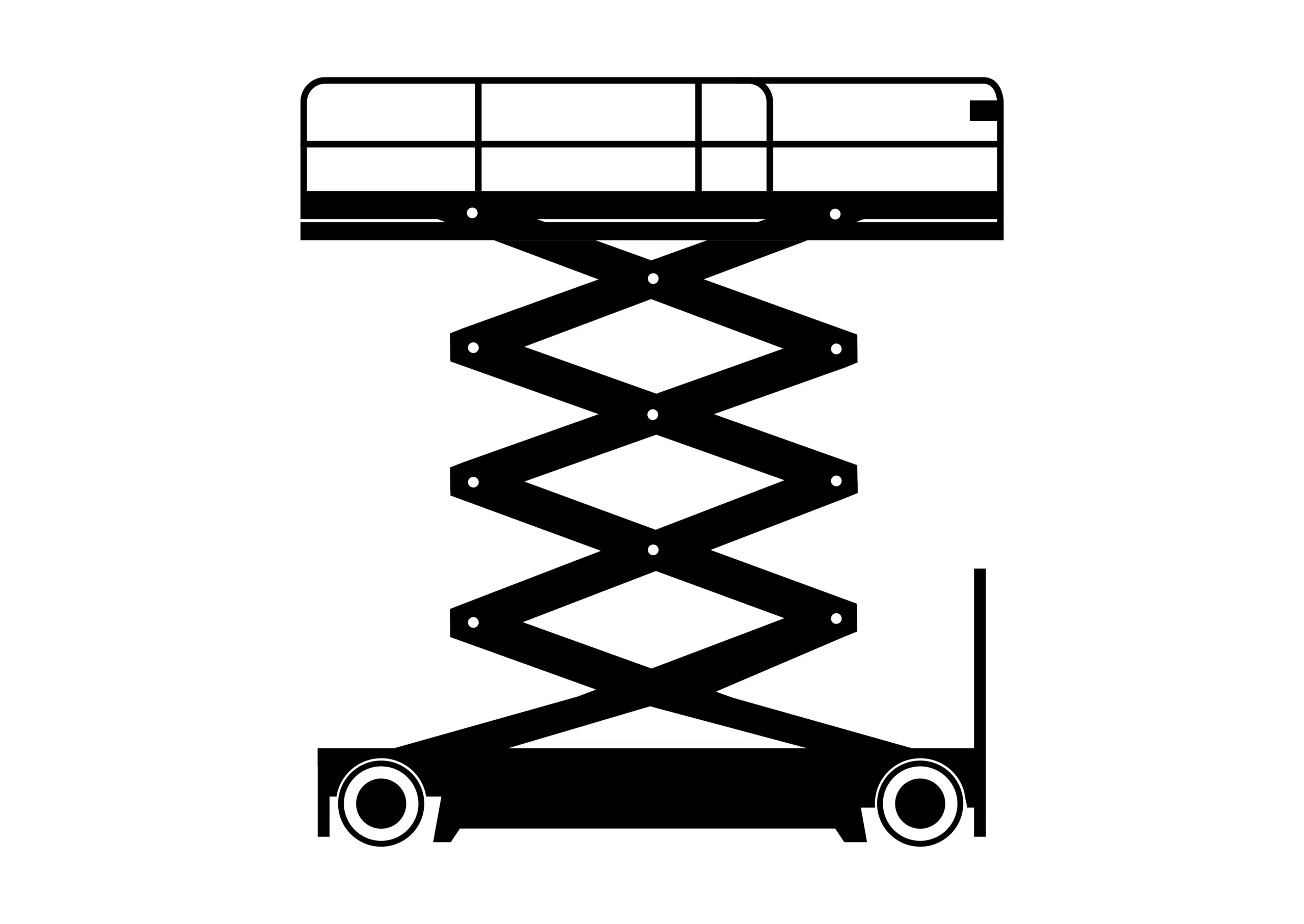
In Zlin, aerial work platforms and construction machinery encounter a building stock that exists nowhere else: the city was built in the interwar period as a unified ensemble of functionalist skeleton buildings - a reinforced concrete grid infilled with unrendered brick, equally across factory, residential and administrative areas. Today these blocks are listed as office, university and commercial space and are being refurbished and converted step by step. Alongside them, the plastics and rubber processing industry works with its extrusion and press lines.
Grid facades in brick: working on listed buildings
The uniform facade is both an advantage and a trap for planning. Advantage: window axes, storey heights and bay widths repeat, so a work rhythm once found can be carried across the whole block. Trap: the brick masonry in the bays is non-load-bearing and sensitive - leaning against it, bracing against the facade or point loads via brackets are ruled out. The platform must stand free.
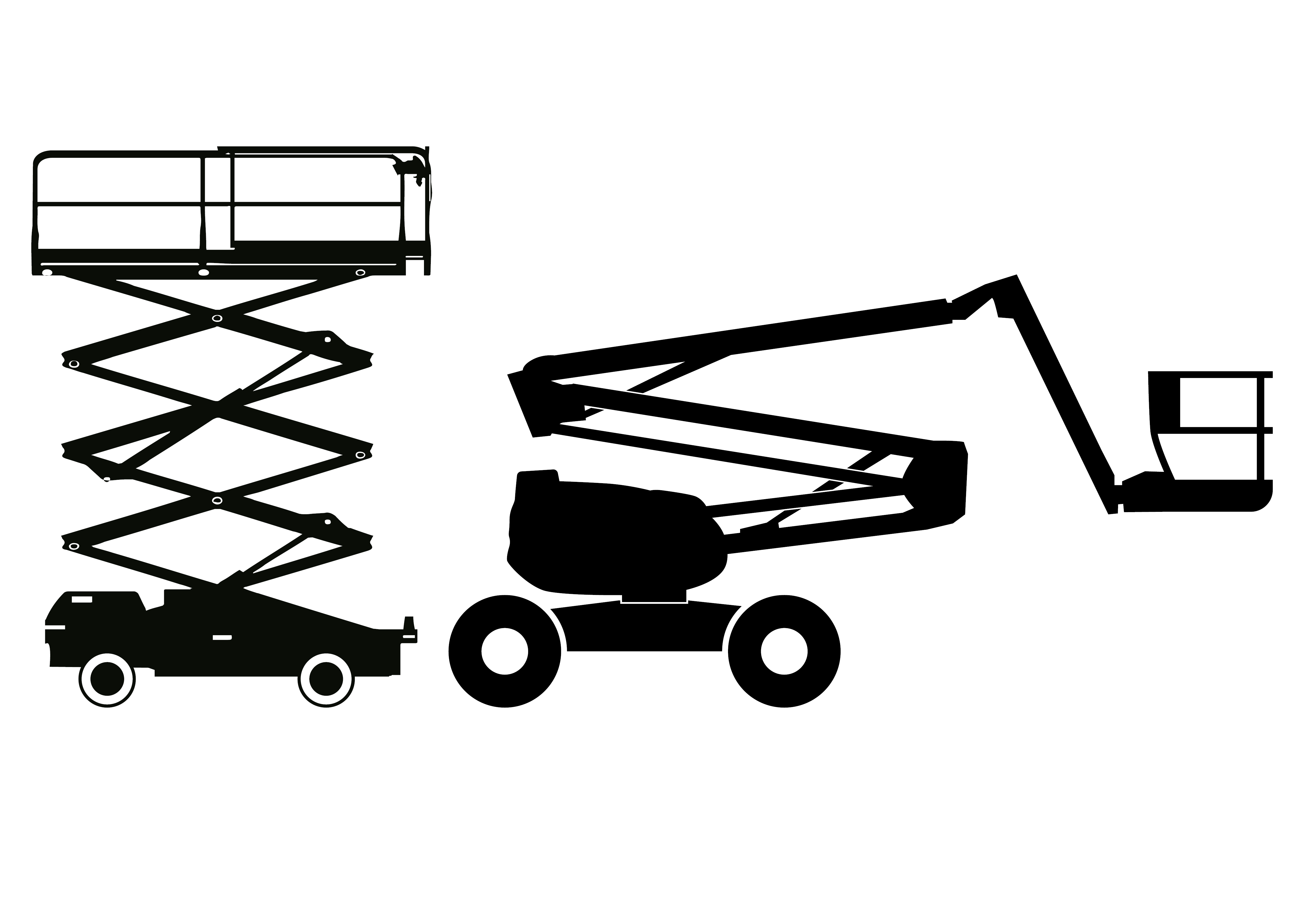
For facade work across several storeys, articulating boom lifts with 10.89 to 48.15 m are the first choice: the articulated boom guides the basket close to the facade without the machine having to drive right up to it. Where forecourts, green strips or trees determine the base position, horizontal outreach decides, not lift height. For roof edges, parapets and rooftop structures of the tallest blocks, telescopic boom lifts with 14.00 to 56.90 m provide reserve - on paved ground and with room for the outriggers.
Narrow lanes between the blocks
The blocks stand in a tight grid, and the spaces between them are dimensioned as access routes, not as set-up areas for construction machinery. Transport width, turning circle and outrigger spread decide feasibility here more often than any height figure. This is where spider lifts show their strength: 13.00 to 39.50 m with the narrowest transport width and the lowest ground pressure in the rental fleet. Measure the narrowest point of the access route in clear width and clear height beforehand - the choice depends on it.
The rental fleet in figures
| Class | Working height | Basket capacity |
|---|---|---|
| Scissor lifts electric | 6.30 - 33.00 m | 227 - 1,000 kg |
| Scissor lifts diesel | 9.70 - 34.00 m | 363 - 1,134 kg |
| High-rack scissor lifts | 18.50 - 33.00 m | 450 - 1,000 kg |
| Articulating boom lifts | 10.89 - 48.15 m | 150 - 450 kg |
| Telescopic boom lifts | 14.00 - 56.90 m | 227 - 454 kg |
| Mast lifts | 10.00 - 12.65 m | 200 kg |
| Spider lifts | 13.00 - 39.50 m | 200 - 400 kg |
Conversion during ongoing use: offices, university, commercial
Very few of these buildings are empty during the work: teaching, administration and tenants carry on while ceilings are opened and new lines are installed in the neighbouring wing. Indoors, the rules of any occupied building therefore apply - drive with zero local emissions, non-marking tyres, controlled ground pressure.
Mast lifts with 10.00 to 12.65 m are the lightest class for interior fit-out and maintenance, movable by one person. Where more basket area and payload are needed, electric scissor lifts with up to 33.00 m and 1,000 kg take over. You should know two dimensions in advance: the stowed height of the machine and the permissible floor load of the slab - in older buildings the latter is regularly the exclusion criterion.
Plastics and rubber processing: maintenance on extrusion lines and presses
The second branch of Zlin's industry works in classic production halls. Extrusion lines, presses and media technology stand close together; maintenance takes place on overhead units, extraction systems, cable routes and hall lighting - often while the neighbouring line is producing.
Electrically driven platforms are the standard here. For working points above plant components that cannot be driven under, electric articulating boom lifts with up to 28.00 m and 280 kg basket load are available. In the rack aisles of finished goods warehouses, high-rack scissor lifts with 18.50 to 33.00 m do the work. If heavy equipment has to go up and the hall is cleared, diesel scissor lifts with up to 1,134 kg come into question - only with sufficient ventilation and explicit approval.
Telehandlers, excavators and forklifts for Zlin
Telehandlers replace the crane where there is none: fixed models with 4.30 to 18.80 m and 1.25 to 25 t load capacity, roto models with 15.42 to 38.90 m for tight courtyards, electric telehandlers with 5.85 to 30.00 m for material transport inside buildings. Excavators from 1.8 to 30 t cover utility lines, foundations, landscaping and interior demolition, complemented by forklifts from 3 to 16 t for warehousing and goods handling.
Operator obligations in the Czech Republic: who is responsible for what
The law at the site is decisive. In the Czech Republic, Government Regulation No. 378/2001 Coll. governs the operation and use of machinery and technical equipment, with a separate annex for equipment for lifting loads and persons. Inspections of mobile elevating work platforms follow CSN EN 280; the legal framework is the Labour Code (No. 262/2006 Coll.) and Act No. 309/2006 Coll. The division of tasks: we provide the machine with a valid inspection certificate, CE documentation and operating manual; the risk assessment, operator instruction and pre-use check are the responsibility of the company using it on site.
For listed buildings, a second level is added that has nothing to do with occupational safety: heritage conservation requirements for set-up areas, anchor points and interventions in the facade. This coordination should come before the choice of machine, not after it.
Transport to Zlin
Zlin is around 460 km from our base in Passau. Transport is handled by our own low-loaders and partner hauliers. For facade projects on the block grid, it pays to schedule several construction phases at once: because the axes repeat, the same machine remains the right choice for weeks - and long-term rental terms apply from a rental period of several months.